Abstract
Background: Effective airway management is critical during out-of-hospital cardiac arrest (OHCA), yet comparative data on blind insertion airway device (BIAD) placement success in rural prehospital settings are limited. Objectives: The study aims to address the literature gap in BIAD success by EMS providers in a rural county, providing preliminary evidence to inform airway equipment usage and BIAD funding decisions. Methods: A convenience sample was taken from January 2024 to April 2024 for King Airway usage and from April 2024 to July 2024 on Air-Q3-ILA. Device success was confirmed by auscultation and visual chest rise per EMS protocol at the first attempt. Device success was compared using Fisher’s Exact Test with a p-value (P<.05). Results: Twenty-seven (N=27) patients received either King Airway (n=13) or Air-Q3-ILA (n=14) device. First-attempt placement success rate was 92.6% overall. Two failures (7.4%), both with the King Airway, were due to incorrect sizing. No significant association was found between device type and first-attempt placement success rate (x2(1, n= = 27), p = .259). Conclusion: This study provided an initial insight into BIAD literature. Future research with a larger sample size may provide greater understanding into resource management for EMS providers.
Introduction
Out-of-hospital cardiac arrest (OHCA) is a dominant public health problem, with high mortality rates observed globally.1 Emergency medical services (EMS) play a critical role in providing initial treatment for patients with OHCA, as part of the American Heart Association six-step chain of survival.2 Prehospital care entails a multifaceted approach, encompassing sequential and simultaneous resuscitation interventions, such as chest compressions, defibrillation, advanced airway management, and medication administration. In the United States, the incidence of OHCA is 357,000 cases annually, of which, 90% are fatal, 10.6% survive initial hospitalization, and 8.2% recover with good functional status.3,4
A strong chain of survival can improve one’s chances of survival and recovery for victims of OHCA. Early and efficient cardiopulmonary resuscitation (CPR) with a rate of 100 to 120 per minute compresses the heart, allowing the circulation of blood and the delivery of residual oxygen to vital organs. Effective ventilation during CPR maintains arterial oxygenation and tissue perfusion. The use of a Blind Insertion Airway Device (BIAD) facilitates uninterrupted ventilation with supplemental oxygen, optimizing the physiological benefits of continuous chest compressions. High-quality CPR and early defibrillation are essential treatment steps in increasing the individual’s chance of survival; adequate oxygenation and ventilation prevent hypoxic injury, increase neurological survival, and decrease morbidity and mortality.3 Basic Life Support (BLS) guidelines state that the rate of rescue breathing should be 10 breaths per minute or every 6 seconds while using supraglottic airway devices.3
Out-of-hospital supraglottic airway interventions are less invasive than endotracheal intubation and allows for rapid placement with minimal interruption to chest compressions, thereby maintaining coronary perfusion during resuscitation.6 No prior studies have directly compared the King Airway and the Air-Q3 ILA devices in cardiac arrest, leaving a notable gap in EMS literature. Although the King Airway has been compared with other BIAD devices, including the i-Gel, it has not been directly compared with the Air-Q3-ILA within the same operational setting.7 This pilot study aimed to address the gap and provide EMS agencies with preliminary evidence to support funding decisions for Blind Insertion Airway Devices (BIADs) in rural counties. In this study’s southeastern state, seventy-eight of 100 counties are classified as rural, where EMS systems face limited funding, staffing shortages, and longer response times.8 This study was conducted in Franklin County, North Carolina, with a population of 70,000, including the largest town of 3,000, dispersed over 491 square miles (139 residents per square mile).9 Educational attainment is limited, and approximately 10% of residents living below the poverty line. The economy relies on trade, construction and manufacturing, and the county lacks a level 1 trauma center, with the nearest facility 55 minutes away.9 Given these constraints, identifying airway devices that are efficient, reliable and cost-effective is essential and evaluating device performance in a rural prehospital setting may serve as a model for similar communities.
The King Airway and Air-Q3 ILA are supraglottic airway devices designed to permit fiberoptic-guided and blind endotracheal intubation. The devices have contrasting engineering designs in terms of form, length, material, sizing guidelines, and anatomical coherence. Once blindly inserted, the King Airway simultaneously inflates the proximal and distal balloon cuffs, occluding the oropharynx and upper esophagus to enable effective positive-pressure ventilation while reducing gastric insufflation and aspiration. According to the manufacturer, the device features a straightened, beveled distal tip that directs the airway posterior to the larynx and into the upper esophagus.10 It also includes a dedicated airway passage and a separate gastric channel, allowing ventilation while minimizing the risk of inadvertent tracheal insertion.10
Placement guidelines are height-dependent, and while the design supports blind insertion and effective ventilation, initial placement may not always achieve optimal positioning, and there is limited evidence to support consistent performance across EMS personnel of varying credential levels.
The Air-Q3 ILA is a full silicone advanced airway device designed with an anatomical curve and epiglottis elevator, lifting the epiglottis for maximized cuff placement. The oval-shaped self-pressurizing cuff allows for a direct seal. As stated by the manufacturer, the ventilating pressure–whether from a ventilator, resuscitation device, or spontaneous breathing–will allow the mask to inflate and seal the airway during inspiration.11 On exhalation, the mask maintains a seal and matches the airway pressure, Positive End-Expiratory Pressure (PEEP), with the self-pressurizing feature allowing the pressure to change between inspiration and expiration.11 Bilateral and distal gastric inlets protect against gastric insufflation and regurgitation. Placement guidelines are weight dependent. The Air-Q3 ILA design enhances placement and ventilation, but initial blind placement may not always be successful, and there is limited evidence to support consistent performance across EMS personnel of all credential levels.
The present study aimed to compare the placement success rate of the King Airway and the Air-Q3 ILA devices. No prior studies have investigated these two devices regarding placement success during OHCA. Our hypothesis was the success rate of blind insertion with the Air-Q3 ILA would be higher than that of the King Airway, given the Air-Q3 ILA’s anatomical curve, epiglottis elevator, and self-pressurizing cuff are designed to facilitate placement and optimize ventilation, whereas the King airway relies on esophageal placement and manually inflated cuffs. Patient demographics, BIAD failure, and transport disposition data were collected to explore this sample population, reasons for BIAD failure, and the frequency of transport.
Methods
A comparative analysis of supraglottic blind insertion airway management procedures was performed by emergency medical staff on prehospital patients in a rural southeastern county in the U.S. This study was approved by the Meredith College institutional review board (IRB #2064). Written consent for this study was granted by the collaborating emergency medical service that included twenty-two ground emergency response paramedic units in a southeastern rural area, with approximately 7,000 advanced life support (ALS) patient contacts per year. Provider-level data (e.g., paramedic, advanced EMT, or EMT) was not shared with the investigators. There is no evidence to determine which provider level was on scene at the time of the BIAD placement. Patients with one attempt at airway management in a cardiac arrest from January to July 2024 were eligible for inclusion. Only the first placement attempt was analyzed. Successful advanced airway placement was primarily confirmed with chest auscultation, with secondary confirmation being visual equal chest rise per the EMS county protocol. Cases requiring multiple attempts or contraindications due to facial trauma were excluded. This exclusion was intended to prioritize the one attempt, as time is crucial during a cardiac arrest. Additional insertion attempts prolong inadequate oxygenation which can lead to tissue hypoxia and rapid organ damage.
The collaborating EMS county established protocols for both blind insertion airway devices based on each design and the manufacturer’s directions. Below are the EMS county procedures, which were approved and shared with the authors.
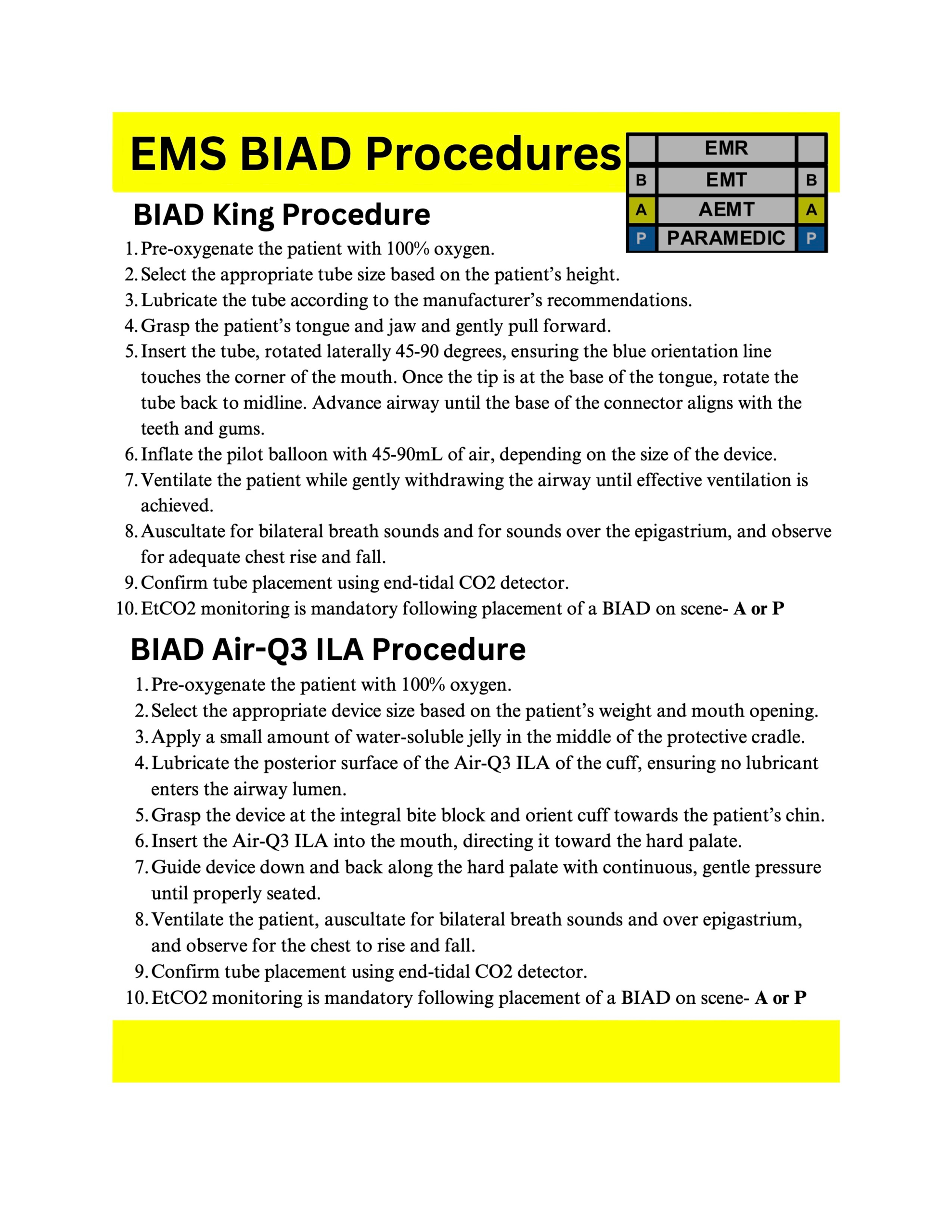
Figure 1. Franklin County EMS BIAD Procedures: King Airway and Air-Q3 ILA
Prehospital placement procedures for BIAD devices, comparing the King airway and Air-Q3 ILA according to EMS protocols. Placement of the BIAD was verified using clinical indicators according to county protocol. The first two steps of this county’s protocol state: “Ventilate patient, auscultate for breath sounds and sounds over the epigastrium. Examine for chest rise and fall. If breath sounds are positive and epigastric sounds are negative, continue ventilation. Confirm tube placement using end-tidal carbon dioxide (EtCO2) detectors or esophageal bulb device following placement of the BIAD once available on scene.”10 EtCO2 data were not shared with investigators as not all provider levels are trained to interpret capnography.
Chart identification was obtained from electronic patient care records (PCR) from ESO software from the EMS collaborator. All HIPAA-related information was excluded before the principal investigator (PI) received data; thus, etiology and epidemiology were excluded. A three-month collection period per device was conducted. The King Airway data was collected from January 2024 to April 2024, and the Air-Q3 ILA data was collected from April 2024 to July 2024. Data for both devices was not collected during the same months due to the collaborating EMS county having transitioned from the King Airway to the Air-Q3 ILA in April 2024. Neither device was used in the field during the same period.
The data was initially obtained and independently verified with PCR data by the EMS collaborator. Data was extracted into an Excel spreadsheet from the EMS county database. Data was analyzed using SPSS software for patient demographics (i.e., sex, age, race, and weight), device placement, and transport disposition. A Fisher’s exact test was calculated due to the small sample size and to examine the association between the success rate of each advanced airway. The one-tailed p-value, (P<.05), represented the hypothesis that the Air-Q3 ILA was predicted to have a higher success rate than the King Airway.
Results
Twenty-nine patient charts were recorded. Two Air-Q3 ILA cases were excluded due to severe facial trauma with obstructed oral access. No BIAD was used in either case. The twenty-seven out-of-hospital cardiac arrest cases (n=27) were studied using two devices: the King Airway (n=14) and Air-Q3 ILA (n=13) supraglottic airway devices.
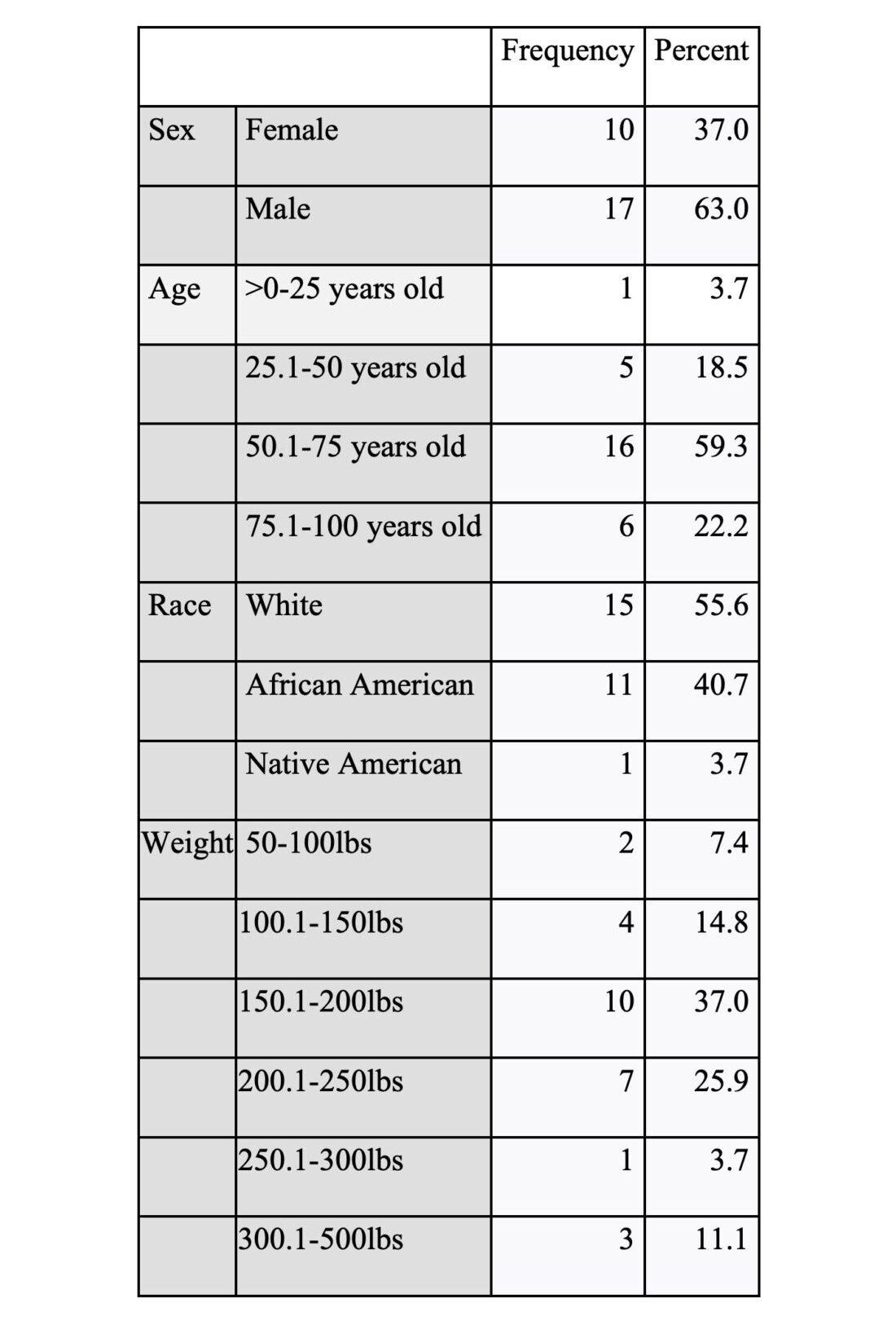
Patient demographics represented 63% males (n=17) and 37% females (n=10), with a median age of 67.5 (19) [IQR: 11-95] years. Race results were 55.6% white (n=15), 40.7% African American (n=11), and 3.7% Native American (n=1). The mean patient weight was 91kg or 200lbs (72) with a range from 43kg – 172.7kg or 95lbs – 380lbs. The most frequently reported demographic information were males, between the ages of 50.1 – 75 years old, white, and weighed 68.3kg – 91kg or 150.1 – 200lbs. Only one pediatric (3.7%) cardiac case occurred during the time of data collection. Further characteristics of patient demographics are presented in Table 1.
Table 1. Frequency Distribution of Case Demographics.
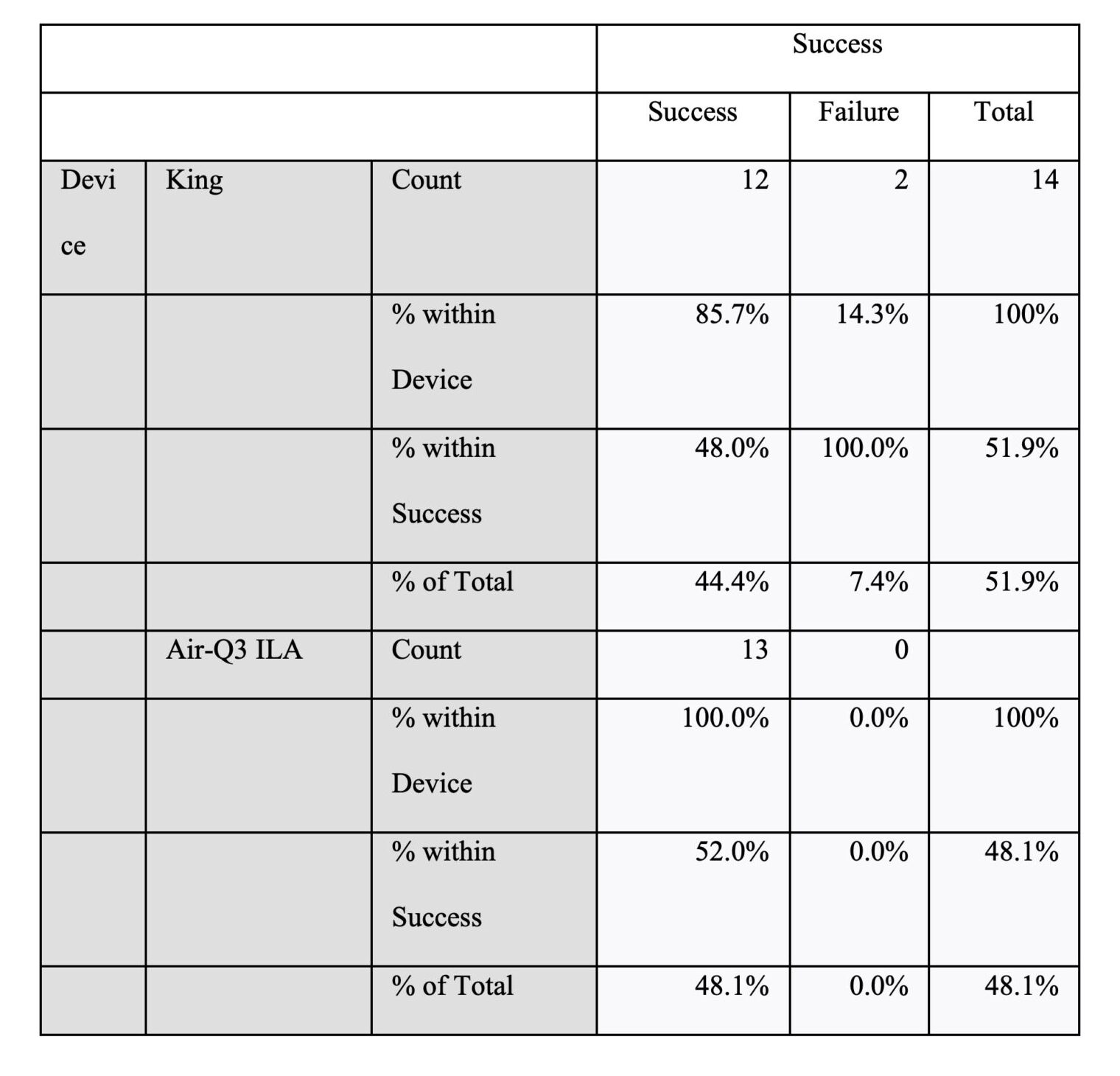
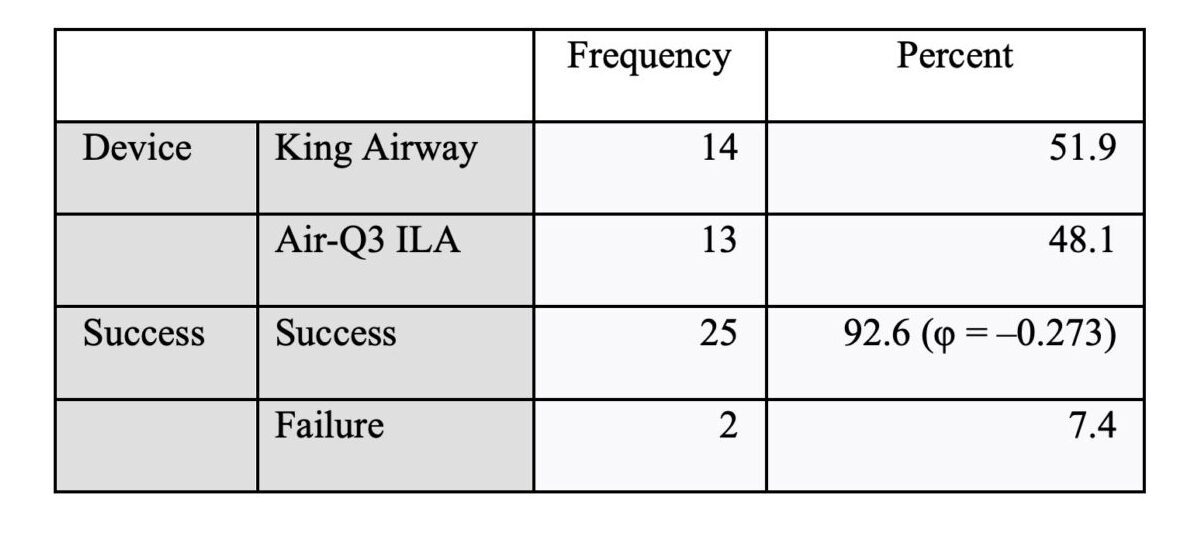
Fourteen patients (51.9%) received the King Airway device, while thirteen (48.1%) received the Air-Q3 ILA airway device. The Air-Q3 ILA recorded an 100% placement success rate (13/13), while the King Airway had an 85.7% success rate (12/14), with all observed failures occurring with the King Airway. One case reported an unsuccessful first attempt due to incorrect BIAD size used. The second attempt was successful after size correction was made. The other case had incorrect BIAD size on first attempt, tube failure on second attempt, and a successful third attempt. Size failure was a factor in both King Airway cases which may indicate that Air-Q3 ILA might have been easier or responded better for the providers.
Further characteristics of device success are shown in Table 2.
Table 2. Placement Success Frequency and Type by Device.
Transport Disposition
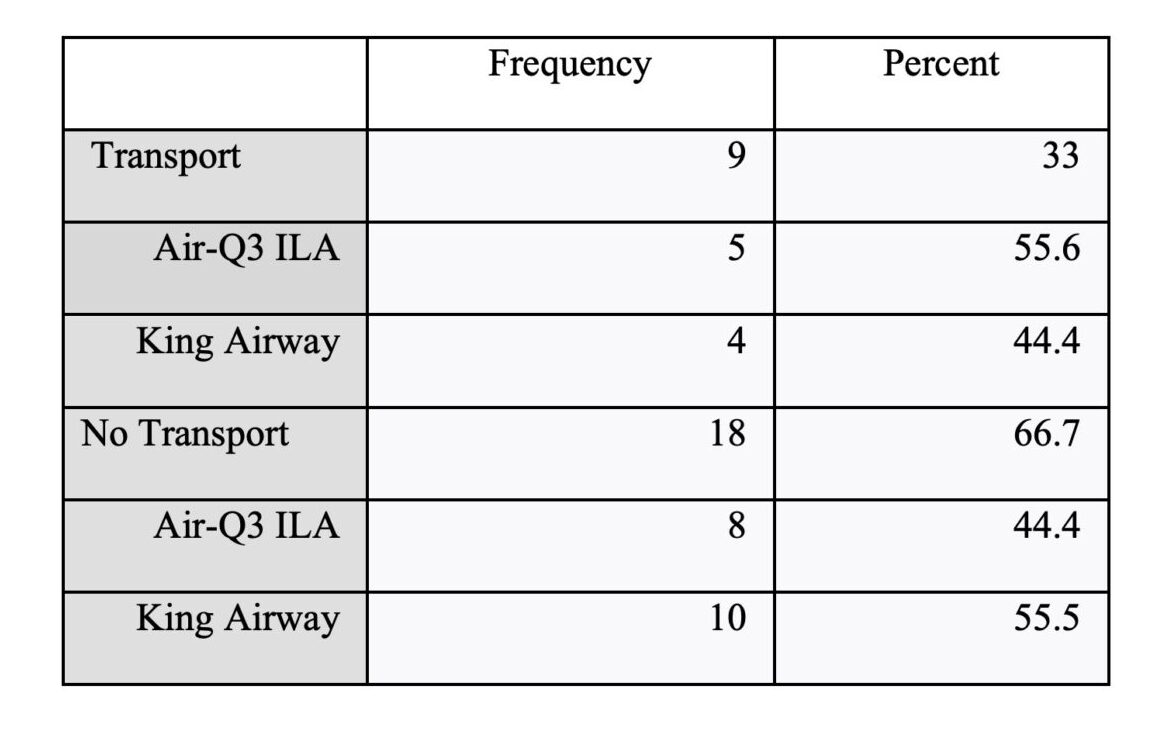
Nine patients were transported (33.3%), and eighteen patients were not transported (66.7%). Of the transported nine patients, only one of the failed first-attempt placement King Airway case was transported. County protocol indicated transport of OHCA due to the return of spontaneous circulation (ROSC). No ROSC scores were provided to the investigators.
Table 3. Frequency and Distribution of Transport Disposition.
Device Placement Success Rate
Total successful first attempt placement of either advanced airway device occurred in twenty-five cases (92.6%), while first attempt device failure which needed additional attempts occurred in two King Airway cases (7.4%). Two King Airway cases reported placement failure at first attempt. Failures were due to the incorrect sizing of the King Airway device. Air-Q3 ILA had all successful placements at the first attempt with no issues. Further characteristics of device placement and success are shown in Table 4.
Table 4. Frequency and Distribution of Device and Placement Success Rate.
Association of Placement Success Rate and Device
Fisher’s Exact Test was used to assess the relationship between placement success rate and device type. No significant association was found, p = 0.259 (one-tailed). The hypothesis that the Air-Q3 ILA would be more successful than the King Airway device was rejected. The corresponding phi coefficient was φ = –0.273, suggesting a weak, negative association with a small-moderate effect size. It appears that the success of BIAD placement may not be associated with the type of device. This outcome is possibly due to the small sample size population. See Table 5 for BIAD and placement success rate association measures.
Table 5. Fisher’s Exact Test for Association Between BIAD device and placement success rate.
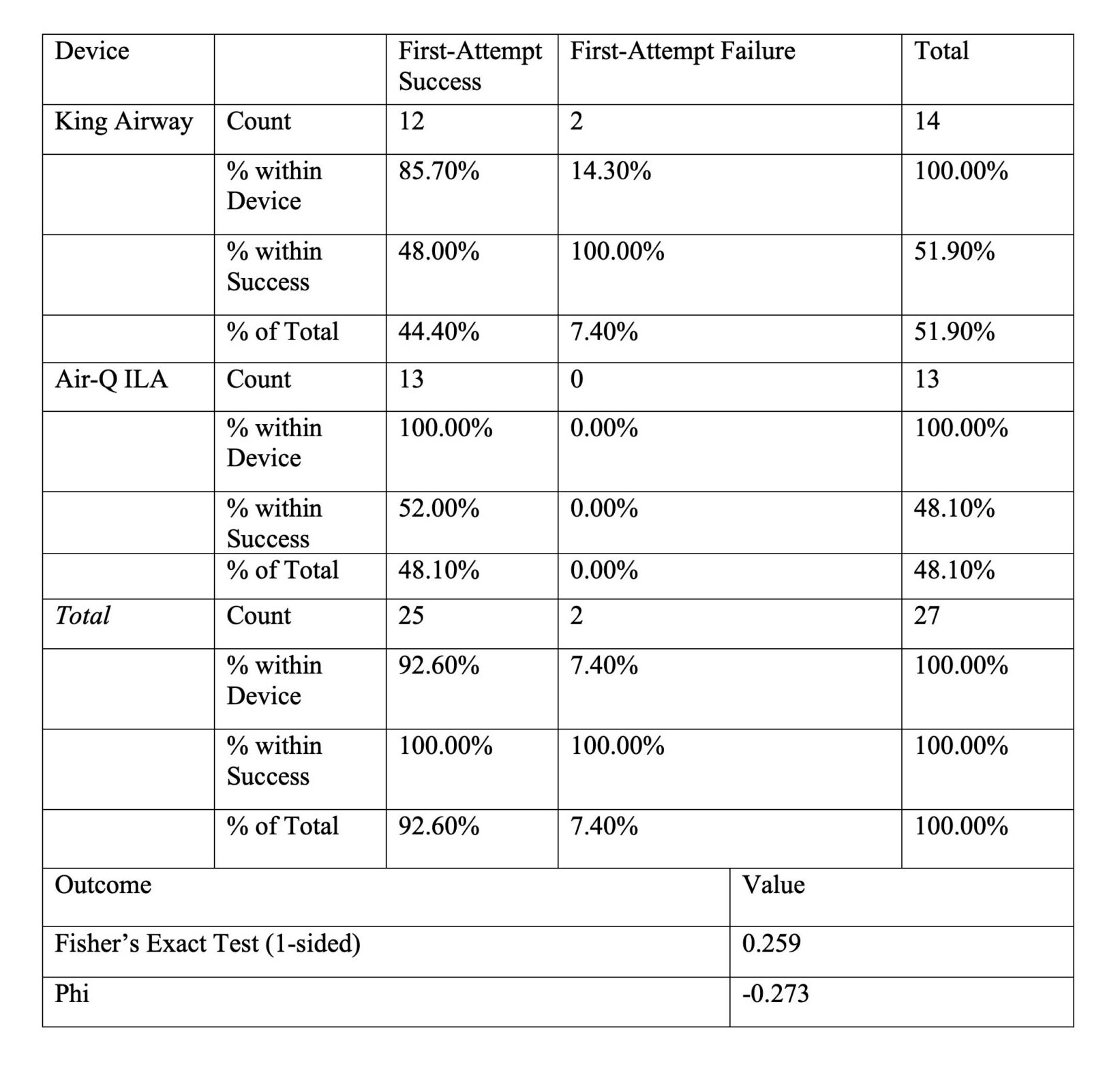
While there was no significant association between BIAD and placement success rate, it is important to note that the Air-Q3 ILA had no placement failures, and the King Airway did have placement failures. Future research with a larger sample size may indicate a stronger association between BIAD device and placement success rate.
Discussion
The intention of this study was to compare the King Airway and the Air-Q3 ILA in a rural prehospital setting, addressing a notable gap in airway management research. Existing literature has not yet established a comparison of placement success rates between the King Airway and the Air-Q3 ILA advanced airway devices. While previous studies have compared the King Airway against other BIAD devices, such as comparison with the i-Gel or explored BIADs more broadly in relation to endotracheal intubation, no research to date has evaluated these two devices directly within the same operational environment.7,13 By providing a comparison in a rural EMS system, this study offers novel evidence with potential implications for EMS protocol development and provider training.
A 2016 revised systematic review comparing blind insertion of the Air-Q3 ILA to endotracheal intubation–facilitated placement of the Air-Q3 ILA found that blind Air-Q3 ILA insertion was successful in all patients (100%), whereas endotracheal intubation–assisted placement was successful in most patients (76.7%).14 The review highlighted differences in hemodynamic response between the Air-Q3 ILA and tracheal intubation, showing reliability, safety, and consistent ventilation of the supraglottic airway device.
Evidence from the broader prehospital airway literature indicates that airway management performance is strongly influenced by provider training, device familiarity, and system-level practice patterns, regardless of the specific advanced airway technique used. These factors are particularly relevant in rural EMS systems, where staffing models often differ significantly from those in urban settings. National data show that more than 50% of rural EMS agencies rely primarily on volunteer personnel, compared with approximately 14% of urban agencies.15 In specific southeastern regions of the United States, more than 160 EMS agencies operate with volunteer staffing, with considerable variability in the number of service hours contributed per provider.15 Reliance on volunteers–combined with limited funding and lower call volumes typically of rural counties–may reduce opportunities for continuous airway skills practice and competency maintenance.
Results from this southeastern rural OHCA study indicated nominal differences in the success rate of the King Airway and Air-Q3 ILA airway devices; however, the study was underpowered and therefore not capable of detecting a statistically significant association between them. The observed placement success rate (100% of the Air-Q3 ILA and 85.7% of the King Airway) should be interpreted as descriptive rather than inferential. Although the Air-Q3 ILA anatomically contoured design and reduced number of preparatory steps may theoretically facilitate higher first-attempt success, the limited sample size constrains the extent to which definitive conclusions can be drawn from these data.
Limitations
The study has several limitations. Data were collected only over a three-month period, resulting in 27 patient charts and a small sample size, limiting the ability to evaluate device performance over a prolonged period. Due to the limited scale of the study, results are not representative of device consistency over a prolonged period. The database came from a single EMS system in a rural southeastern area. Given the significant heterogeneity in EMS services in the United States, these results are not generalizable to systems in other geographic regions. The data analyzed was not randomly collected but at the discretion of EMS personnel under medical direction, potentially introducing confounding by indication. The study consisted of only two advanced airway devices. Thus, limitations were consistent with a comparison of the two devices.
Due to cardiac arrest occurring unpredictably and including cases representing OHCA incidents within the study period, data were documented as part of routine clinical care rather than under standardized research conditions, introducing variability in reporting and the potential for additional confounding. ROSC data were not provided to the researchers; only transport data was available. Future studies may include ROSC scores to confirm a proper circulatory intervention.
The absence of quantitative waveform capnography (EtCO2), the current standard for objective confirmation of airway placement, reduces the accuracy of the documented success rates and constrains both the internal validity and generalizability of the findings. Future investigations and quality-assurance processes should incorporate objective capnography verification to ensure reliable assessment of supraglottic airway performance. Although patient demographic data were collected, the small sample size limited evaluation of how demographic factors such as age, sex, and physical characteristics may influence BIAD placement success. Further studies with larger samples should examine the impact of patient characteristics on airway device outcomes. These findings underscore the need for larger, more rigorous studies incorporating broader patient populations, multiple EMS systems, and objective verification of airway placement to more definitively assess device performance and support sustainable, high-quality prehospital care.
Conclusion
This pilot study provides preliminary data on the performance of the King Airway and Air-Q3 ILA supraglottic airway devices during OHCA. Both devices demonstrate high observed success rates, with the Air-Q3 ILA showing no failures in this small sample. Given operational and financial constraints common to rural EMS systems, identifying airway devices that are efficient, reliable, and cost-effective is critical. Evaluating device performance in this context offers a practical model for other rural or resource-limited communities and can inform evidence-based procurement and protocol decisions.
References
- Ho AFW, Lim MJR, Earnest A, et al; Singapore PAROS Investigators. Long-term survival and disease burden from out-of-hospital cardiac arrest in Singapore: A population-based cohort study. Lancet Reg Health West Pac. 2022;32:100672. doi:10.1016/j.lanwpc.2022.100672
- American Heart Association. Out-of-hospital chain of survival. Updated September 23, 2024. Accessed February 17, 2025. https://cpr.heart.org/en/resources/cpr-facts-and-stats/out-of-hospital-chain-of-survival
- Mohamed BA. Airway management during Cardiopulmonary Resuscitation. Curr Anesthesiol Rep. 2022;12(3):363-372. doi:10.1007/s40140-022-00527-z
- Tsao C, Aday A, Almarzooq Z. Correction to: Heart disease and stroke Statistics—2023 update: A report from the American Heart Association. Circulation. 2023;148(4). doi:10.1161/cir.0000000000001167
- Vestergaard LD, Lauridsen KG, Krarup NHV, Kristensen JU, Andersen LK, Løfgren B. Quality of cardiopulmonary resuscitation and 5-year survival following in-hospital cardiac arrest. Open Access Emerg Med. 2021;13:553-560. doi:10.2147/OAEM.S341479
- Bielski A, Rivas E, Ruetzler K, et al. Comparison of blind intubation via supraglottic airway devices versus standard intubation during different airway emergency scenarios in inexperienced hands: Randomized, crossover manikin trial. Medicine. 2018;97(40):e12593. doi:10.1097/MD.0000000000012593
- Price P, Laurie A, Plant E, Chandra K, Pishe T, Brunt K. Comparing the First-Pass Success Rate of the King LTS-D and the i-gel Airway Devices in Out-of-Hospital Cardiac Arrest. Cureus. 2022;14(11):e30987. Published 2022 Nov 1. doi:10.7759/cureus.30987
- Baxley J. Disparate issues shape rural health in North Carolina. North Carolina Health News. May 25, 2023. Accessed February 17, 2025. https://www.northcarolinahealthnews.org/2023/05/19/disparate-issues-shape-rural-health-in-nc/
- U.S. Census Bureau Quickfacts: Franklin County, North Carolina. Quick Facts Franklin County, North Carolina. Accessed January 8, 2026. https://www.census.gov/quickfacts/fact/table/franklincountynorthcarolina/PST045224.
- Ambu. Ambu® King LTS-D™ Disposable Laryngeal Tube. Accessed February 17, 2025. https://www.ambuusa.com/airway-management-and-anaesthesia/laryngeal-tubes/product/ambu-king-lts-d-disposable-laryngeal-tube
- AirLife. Air-Q®3. Published September 25, 2025. Accessed February 17, 2025.
- Franklin County EMS. Franklin County EMS Protocol and Procedures. Unpublished internal document. 2025.
- Smida T, Menegazzi J, Scheidler J, et al. A retrospective comparison of the King Laryngeal Tube and iGel supraglottic airway devices: A study for the CARES surveillance group. Resuscitation. 2023;188:109812. doi:10.1016/j.resuscitation.2023.109812
- Attarde VB, Kotekar N, Shetty SM. Air-Q intubating laryngeal airway: A study of the second-generation supraglottic airway device. Indian J Anaesth. 2016;60(5):343-348. doi:10.4103/0019-5049.181596
- National Rural Health Association. EMS Services in Rural America: Challenges and Opportunities. Accessed February 17, 2025. https://www.ruralhealth.us/getmedia/cc0078fa-14d2-47eb-98a6-2bb6722e540c/2019-NRHA-Policy-Document-EMS-Services-in-Rural-America-Challenges-and-Opportunities.pdf
Acknowlegments
The authors would like to thank Franklin County for its collaboration and support throughout this project.