2026 • 8(2) • DOI: 10.30542/JCEMS.2026.08.02.06
Drexel University EMS (DUEMS) is a student-run collegiate EMS agency located in Philadelphia, Pennsylvania. It recently certified 20 of its members in Advanced Cardiovascular Life Support (ACLS) through classes taught on campus by the Drexel University College of Nursing and Health Professions, an AHA Training Center.
“We thought that hosting an ACLS class would allow them to both grow their knowledge base to become better providers as well as give them a certification to hopefully set themselves up for success outside of DUEMS,” stated Joey Kloss, Captain/VP of Drexel University Emergency Medical Services.
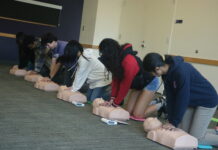
The training to certify 20 total members took place in two separate six-hour classes, with required completion of pre-course material, such as electrocardiogram (ECG) reading and interventions. The class consisted of hands-on ACLS scenarios and lectures. Funding for this training was paid with agency budget through the Drexel University Student Organization Resource Center.1
Planning the training was difficult logistically, due to limited member availability on weekdays. The training was eventually held on a weekend, and DUEMS selected members to participate in the ACLS course through a tiered system: current/former officers, FTO corps, crew chiefs, and general membership EMTs. The ACLS training was intended to enhance patient care within DUEMS by ensuring EMTs have a deeper understanding of the cardiovascular system, as well as the procedures they could assist paramedics with in cases of cardiac emergency calls. In addition, the ACLS certification course served as a confidence booster for newly trained EMTs and strengthened their provider skills.
When asked about advice for other collegiate EMS agencies looking to certify their own members, DUEMS recommended starting planning early and with a realistic timeframe, asking training centers about group pricing deals, ensuring participants can commit to the pre-coursework and in-class effort required, and considering implementing a fair sign-up priority system if spots are limited.
DUEMS shared that offering an ACLS course to collegiate EMS agency members had many benefits, including a stronger understanding of cardiac emergencies, greater confidence in assisting paramedics during high-acuity calls, and added value for members preparing for future healthcare roles. According to the agency, the training also gave members an opportunity to learn together and strengthen their connections as providers.
1DUEMS got a discount from their school’s AHA Training Center to host the training.
Author and Article Information
Address for Correspondence: Rahma Fares | Email: jcems@jcems.org
Conflicts of Interest/Funding Sources: By the JCEMS Submission Declaration & Disclosures Form, all authors are required to disclose all potential conflicts of interest and funding sources. The author serves in an uncompensated role with The Journal of Collegiate Emergency Medical Services as a News Contributor. The author declared no conflicts of interest. The author declared that they did not receive funding to conduct the research and/or writing associated with this work.
Authorship Criteria: By the JCEMS Submission Declaration Form, all authors are required to attest to meeting the four ICMJE.org authorship criteria: (1) Substantial contributions to the conception or design of the work; or the acquisition, analysis, or interpretation of data for the work; AND (2) Drafting the work or revising it critically for important intellectual content; AND (3) Final approval of the version to be published; AND (4) Agreement to be accountable for all aspects of the work in ensuring that questions related to the accuracy or integrity of any part of the work are appropriately investigated and resolved. All content represents the opinions and views of the authors and does not represent the opinions and/or policies of The Journal of Collegiate Emergency Medical Services, or of the publisher, National Collegiate Emergency Services Foundation, unless otherwise stated.
Submission History: Received February 07, 2026, accepted for publication March 22, 2026.
Published Online: November 08, 2026
Reviewer Information: In accordance with The Journal of Collegiate Emergency Medical Services Editorial & Practice Policies, News and Commentary manuscripts are reviewed by the JCEMS Editorial Board and, as needed, independent reviewers. JCEMS thanks the Editorial Board members and independent reviewers who contributed to the review of this work.
Copyright: © 2026 Fares. This is an open access article distributed under the terms of the Creative Commons Attribution 4.0 International (CC BY 4.0) License, which permits unrestricted use, distribution, and reproduction in any medium, provided the original author and source are credited. The full license is available at: https://creativecommons.org/licenses/by/4.0/
Electronic Link: https://doi.org/10.30542/JCEMS.2026.08.02.06