Abstract
Background: Bystander intervention in out of hospital cardiac arrest and opioid overdoses significantly improves survival, yet training opportunities and bystander confidence remain limited. Collegiate-based emergency medical services (CBEMS) agencies may play a key role to address these gaps on college campuses through a peer-led training program. Objectives: This pilot study aims to characterize and evaluate free, peer-led naloxone administration and CPR/AED training sessions delivered by a CBEMS agency at a large, public university. Methods: We conducted a retrospective analysis of survey responses from participants of naloxone administration and CPR/AED training sessions delivered by a CBEMS agency and assessed self-reported confidence, knowledge, helpfulness, accessibility, and encouragement. Results: 301 training session attendees completed the surveys. 14.5% of respondents reported “high” or “very high” confidence in administering naloxone before training, compared to 94.9% (p<0.0001) after training. Similarly, respondents who reported “high” or “very high” confidence in performing CPR increased from 16.6% to 97.5% (p<0.0001). In both the naloxone and CPR/AED training courses, over 90% found the training helpful and the majority of participants indicated they would not have been able to pursue similar training elsewhere. Conclusion: CBEMS-led emergency response training delivered through CBEMS agencies may improve self-rated confidence and knowledge in life-saving interventions on college campuses. CBEMS agencies and their sponsoring institutions should consider implementing such programs to enhance campus emergency preparedness.
Introduction
Out-of-hospital medical emergencies, such as cardiac arrest and opioid overdoses, represent critical public health challenges that require immediate intervention. Only 40% of out-of-hospital cardiac arrest (OHCA) patients receive bystander cardiopulmonary resuscitation (CPR) despite its potential to double survival rates.1 Additionally, opioid overdose rates have risen in recent years,2 increasing opportunity for bystander intervention through the administration of naloxone, an over-the-counter medication that acts as an opioid antagonist.3 Thus, expanding access to life-saving bystander training sessions, including CPR/AED and naloxone administration, is essential.
College campuses represent a unique setting for such initiatives due to their dense, interconnected communities and the potential for peer-driven education and engagement. Furthermore, Collegiate-Based Emergency Medical Services (CBEMS) agencies—student-run organizations that provide emergency response services—are particularly well-positioned to deliver these trainings to large student populations, given their established role in campus emergency response and health education.
While previous studies have illuminated how peer-led bystander training can be effective4–6, little has been done to examine the impact of CBEMS-run programs to fill gaps in training. This study will evaluate the efficacy of a program administered by a CBEMS agency at a large, public, urban university with an enrollment of over 35,000 undergraduate and 15,000 graduate students. The CBEMS is a non-transporting BLS agency with an annual call volume of 400. On campus, AEDs and overdose reversal kits are readily available in high-traffic zones. By examining changes in participants’ self-reported confidence, knowledge retention, helpfulness, and encouragement, we aim to describe and assess the effectiveness of this novel CBEMS-led training model and its potential application to other institutions.
Methods
Study Design
This study was conducted as a retrospective evaluation of quality improvement data gathered from the CBEMS-led bystander training sessions from January to May of the year 2024. The training sessions were administered and managed by a CBEMS agency, as a part of standard offered community outreach services. The overarching program included two distinct courses, a naloxone training and a CPR/AED training, both of which were free and open to all university students, staff, and faculty. Inclusion criteria for the study included participants who completed the course and the end-of-training survey.
Training
The naloxone training was a one-hour in-person course titled “Opioid Overdose Recognition & Naloxone Administration” and was designed and led by certified Emergency Medical Technicians (EMTs). Participants learned to recognize the signs of opioid overdose and how to administer naloxone, receiving a certificate of completion determined by their active participation. The CPR/AED training was an in-person three-hour course titled “American Red Cross Adult CPR/AED” and was taught by certified American Red Cross (ARC) instructors. Participants learned CPR techniques and AED use, receiving a two-year ARC Adult CPR/AED certification upon completion determined by active participation. Both courses included a combination of lecture-based instruction and hands-on practice. Both courses were held in central campus locations, delivered in small groups (between 10-30 students), and followed a consistent instructional format throughout the data collection period. There was a minimum of one instructor present for every 12 participants, and all instructors were affiliated with the university’s CBEMS agency.
Recruitment & Enrollment
This study examines data from the courses offered in a four-month period between January 30th, 2024 to May 25th, 2024. A total of eight naloxone and nine CPR/AED courses were held in this timeframe.
The training courses were advertised through the CBEMS agency’s social media channels, emails to students from the student body government, and posters in high-traffic areas. Participants could register for the courses on the website of the CBEMS agency.
Data Collection & Analysis
Following completion of either training course, participants were invited to complete a single online survey, with no incentive provided for participation. The survey contained 14 total items, of which 11 were included in the present analysis. These included three demographic questions, four stand-alone questions, and two sets of pre- and post-training questions. Demographic and stand-alone items were identical across the naloxone and CPR/AED training sessions, while pre and post-training questions differed by course to reflect skill-specific competencies. Three items were excluded from analysis: two short-response questions soliciting participant feedback on valuable aspects of the training and suggestions for improvement, and one binary item assessing whether participants would recommend the course to others.
Demographic measurements were age, class standing, and race/ethnicity. Stand-alone questions asked participants to report helpfulness of the training session, anticipated retention of knowledge, accessibility of the training relative to other available options, and level of encouragement to pursue additional training. Pre- and post-training questions assessed self-reported confidence and knowledge for course-specific skills and were administered in paired format, with one item requesting participants’ score their perceived confidence or knowledge prior to the training and a corresponding item requesting scores following completion of the training.
All non-demographic questions were organized on a 5-point Likert scale. Accessibility of the courses was assessed based on how likely respondents felt they would seek out a similar course had this session not existed, ranked from “Very Unlikely” (1) “Very Likely” (5). The perceived helpfulness, knowledge retention, and level of encouragement were ranked from “Not At All Helpful/Not At All Well/Not At All Encouraged” (1) to “Very Helpful/Very Well/Very Encouraged” (5), respectively. Confidence and knowledge before and after the training session were ranked on a scale from “Very Low” (1) to “Very High” (5).
Descriptive statistics were used to summarize all data. Changes in participants’ confidence levels pre- and post-training were analyzed using the Wilcoxon Signed-Rank Test, a non-parametric statistical test suitable for paired ordinal data. For all tested hypotheses, α was set at 0.05. All data analysis was performed using R (version 4.3.3).
Ethical Considerations
All survey responses were de-identified for the purposes of the study. Participation in the training course and survey was voluntary, and receipt of either certification was not contingent on completion of the survey. The study protocol was reviewed and approved by the local university Institutional Review Board.
Results
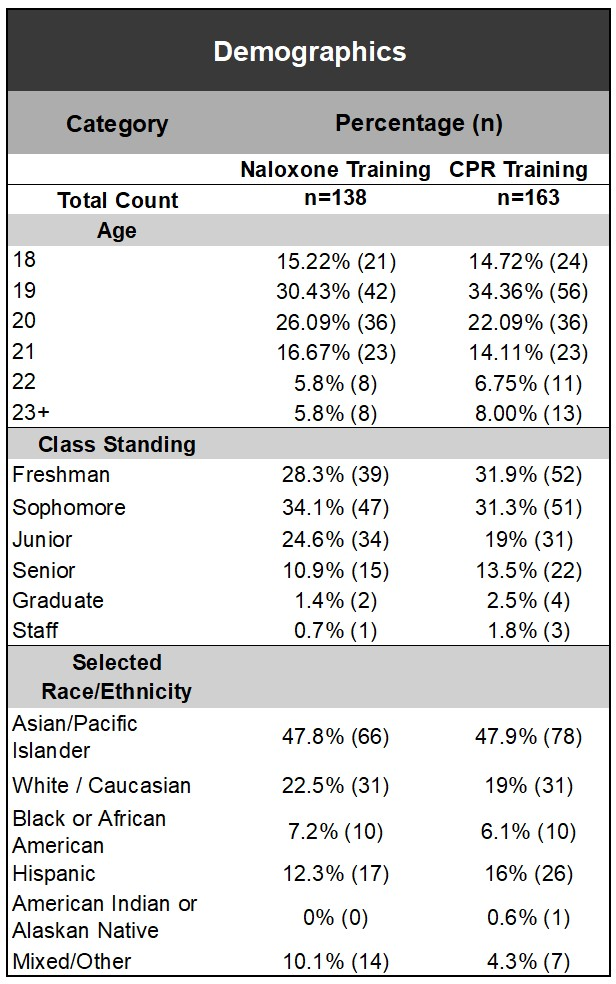
A total of 175 people attended a naloxone training, while 226 attended a CPR/AED training. Of these, 138 (78.9%) and 163 (72.1%) completed an end-of-course survey for the naloxone and CPR/AED training, respectively. The respondents were predominantly undergraduate students, with freshmen (28.3% naloxone, 31.9% CPR/AED) and sophomores (34.1% naloxone, 31.3% CPR/AED) representing the largest groups. The most common age group was 19 years (30.4% naloxone, 34.4% CPR/AED), with few participants over 23 years of age (5.8% naloxone, 5.8% CPR/AED). Table 1 summarizes participant demographics.
Table 1. Training Participant Demographics
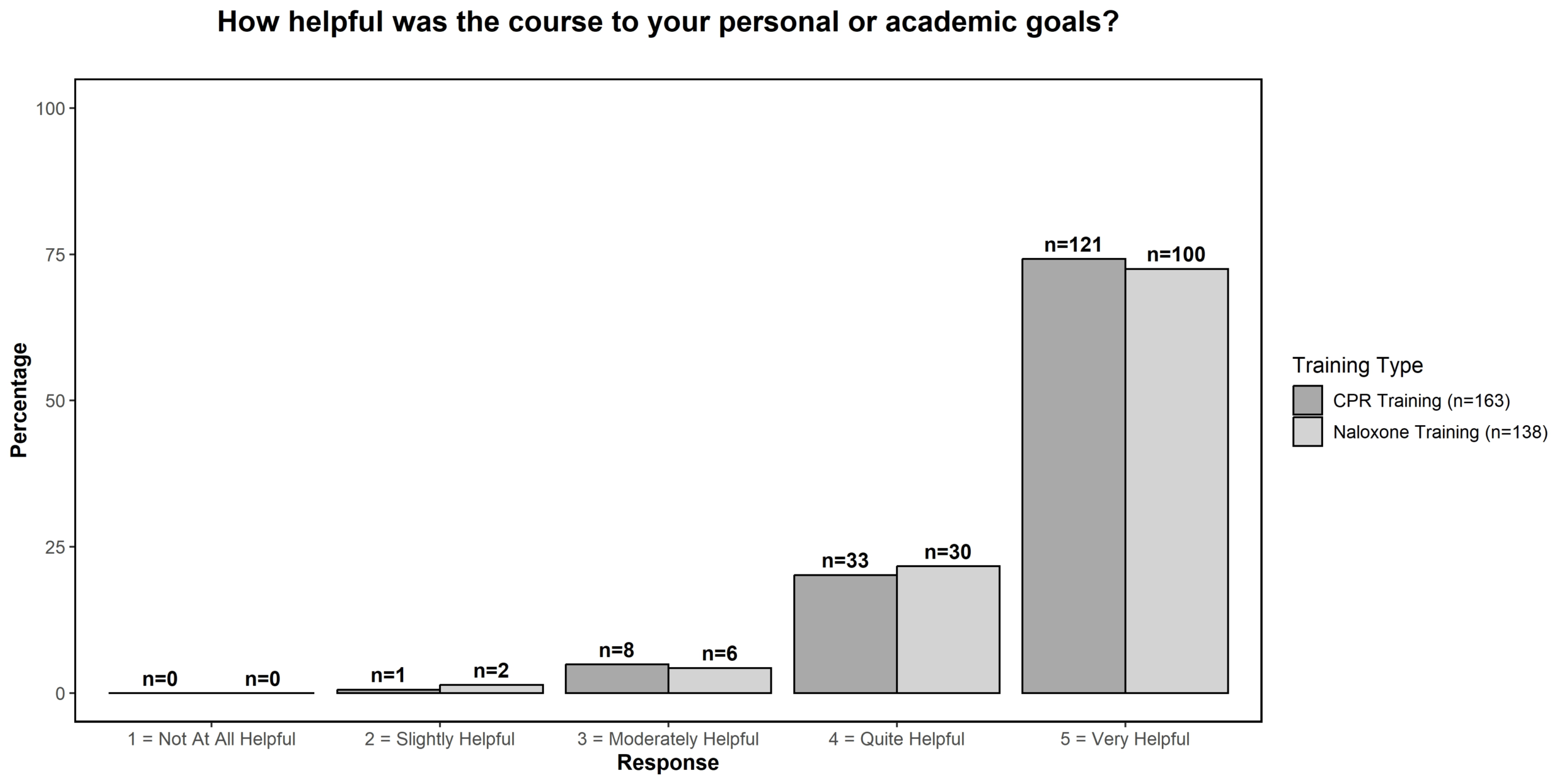
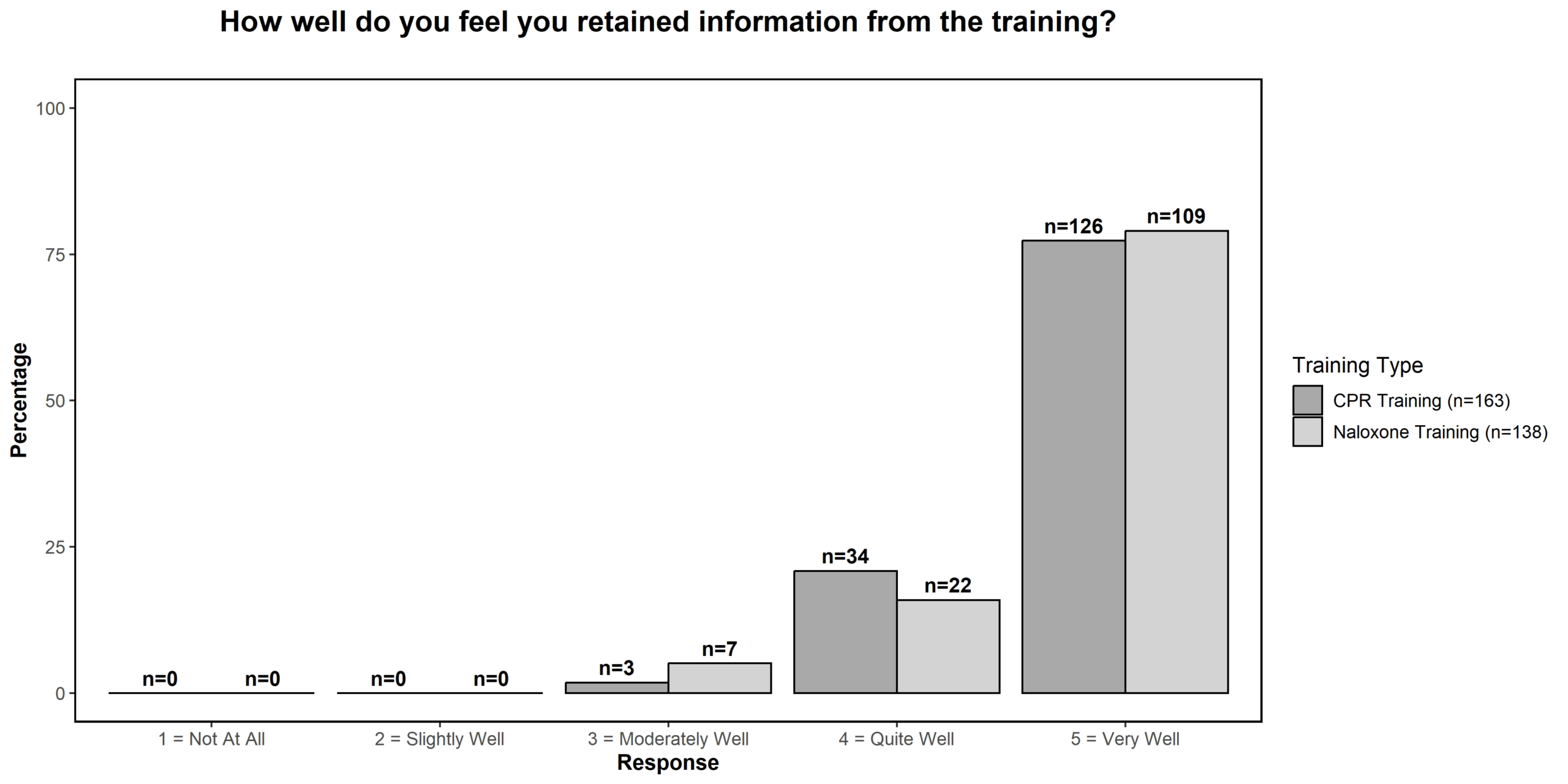
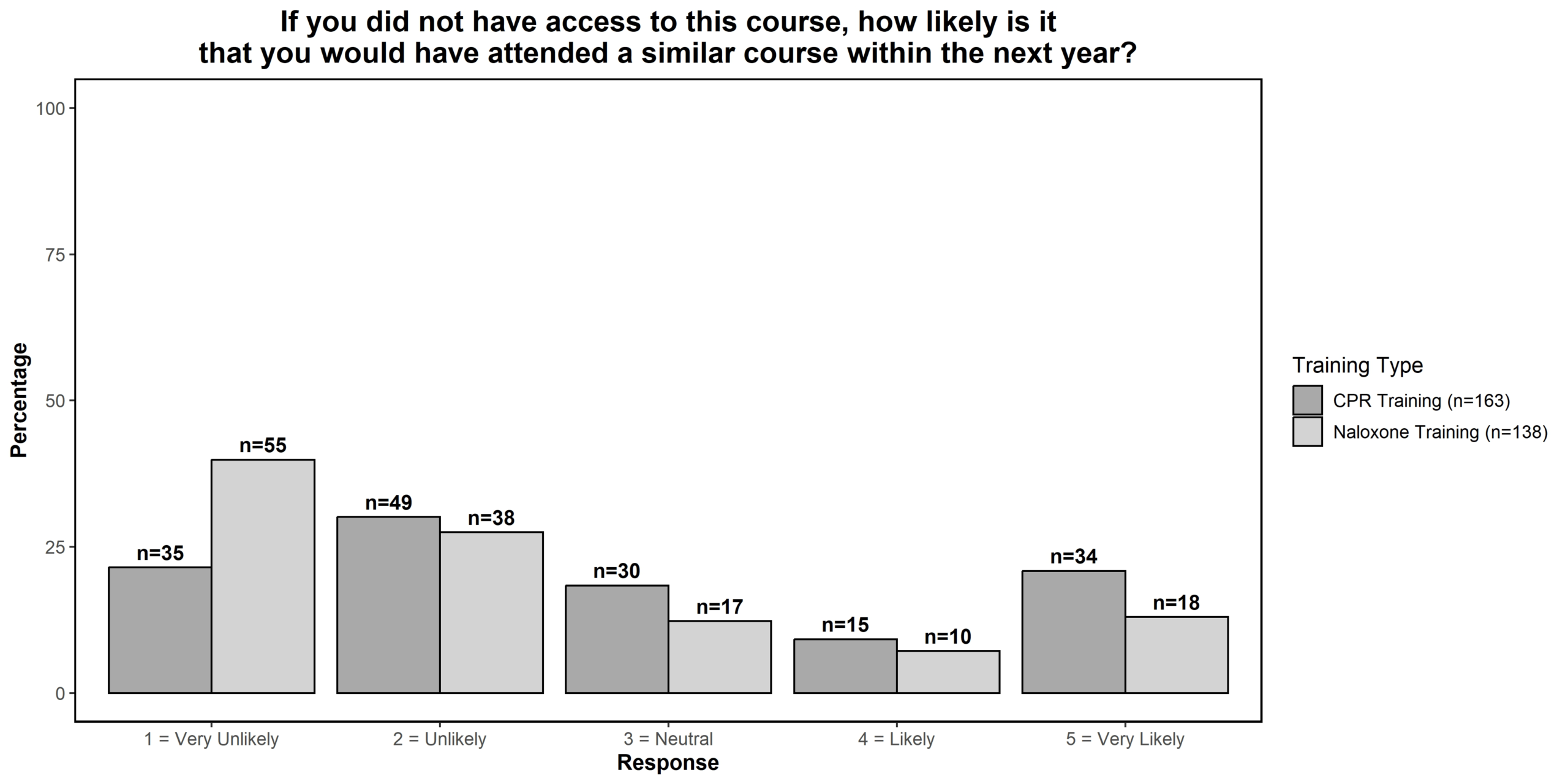
The naloxone and CPR/AED training courses were perceived as beneficial to respondents, with 94.2% and 94.5% of respondents, respectively, rating the courses as “Quite Helpful” (4) or “Very Helpful” (5) (Figure 1A). Respondents’ self-reported knowledge retention was similarly positive, as 94.9% of naloxone and 98.2% of CPR/AED training course respondents indicated they felt they retained the material “Quite Well” (4) or “Very Well” (5) (Figure 1B). Accessibility emerged as a significant factor, as 67.4% of naloxone respondents and 51.5% of CPR/AED respondents indicated they were “Very Unlikely” (1) or “Unlikely” (2) to attend a similar course elsewhere if this training session had not been offered (Figure 1C). Moreover, the courses fostered interest in further training, with 95.7% of naloxone and 89.0% of CPR/AED respondents feeling “Quite Encouraged” (4) or “Very Encouraged” (5) to pursue additional emergency medical education, such as Basic Life Support (BLS) or EMT certification (Figure 1D).
A)
 B)
 C)
 D)
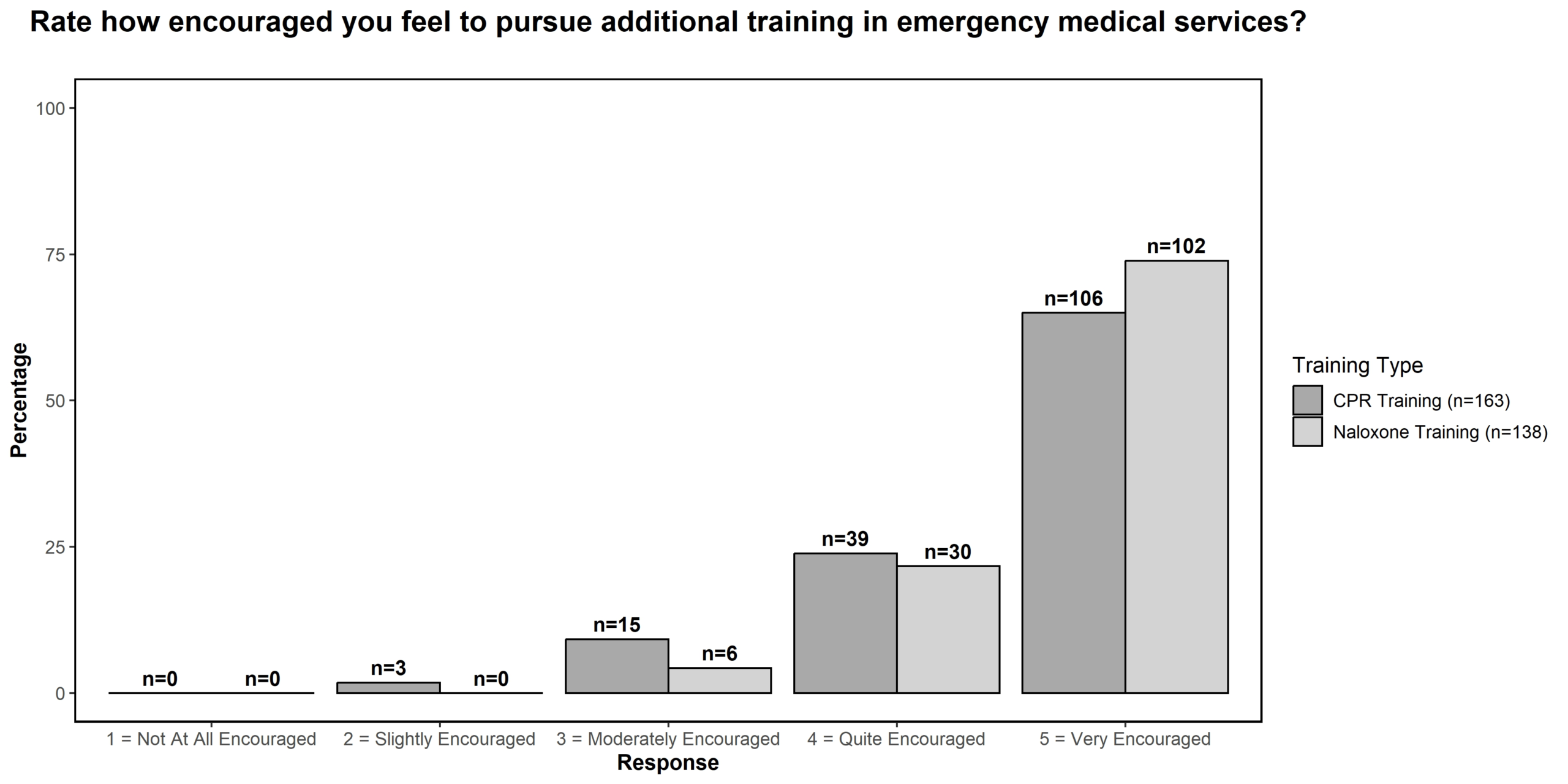
Figure 1. Post-course survey responses. (A) Bar chart of likert distributions for helpfulness (B) Bar chart of likert distributions for perceived retention (C) Bar chart of likert distributions for likelihood of taking a similar course elsewhere (accessibility) (D) Bar chart of likert distributions of the level of encouragement to pursue more training
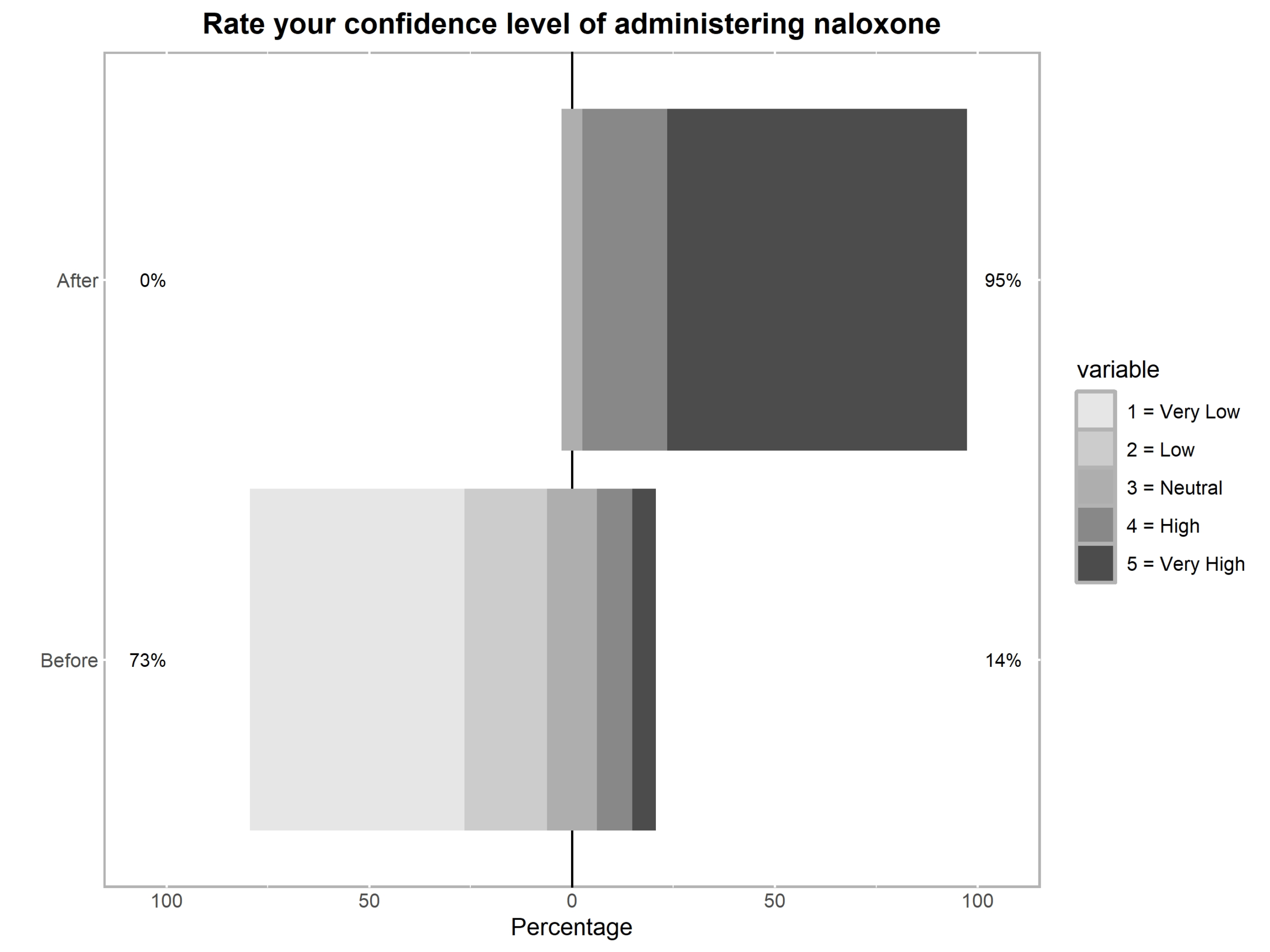
Only 19.6% of respondents felt their knowledge about how to recognize an opioid overdose was “High” (4) or “Very High” (5) before the naloxone training course, compared to 98.6% after the training (Figure 2A). Similarly, “High” (4) or “Very High” (5) self-reported levels of confidence in administering naloxone rose from 14.5% pre-training to 94.9% post-training (Figure 2B).
For the CPR/AED training, respondent reports of “High” (4) or “Very High” (5) confidence in performing CPR increased from 16.6% pre-training to 97.5% post-training (Figure 2C). Perceived “High” (4) or “Very High” (5) levels of knowledge about using an AED improved from 16.3% to 94.5% of respondents (Figure 2D).
Analysis of post-course responses indicating perceived confidence and knowledge pre- and post-training by Wilcoxon Signed-Rank Test revealed a statistically significant positive change in self-reported confidence or level of knowledge across all four measured domains of emergency response skills (p<0.0001 for each).
A)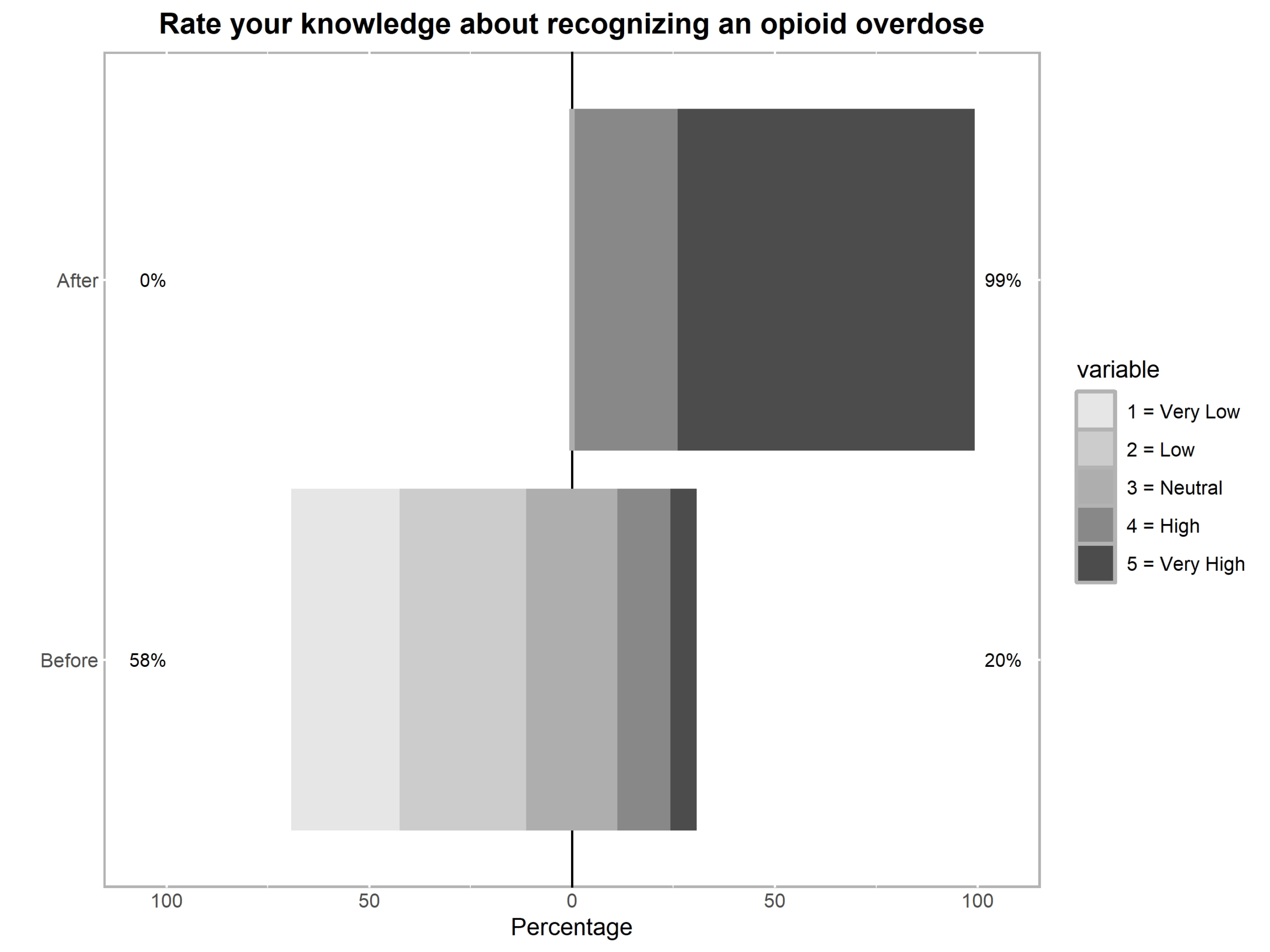 B)
C)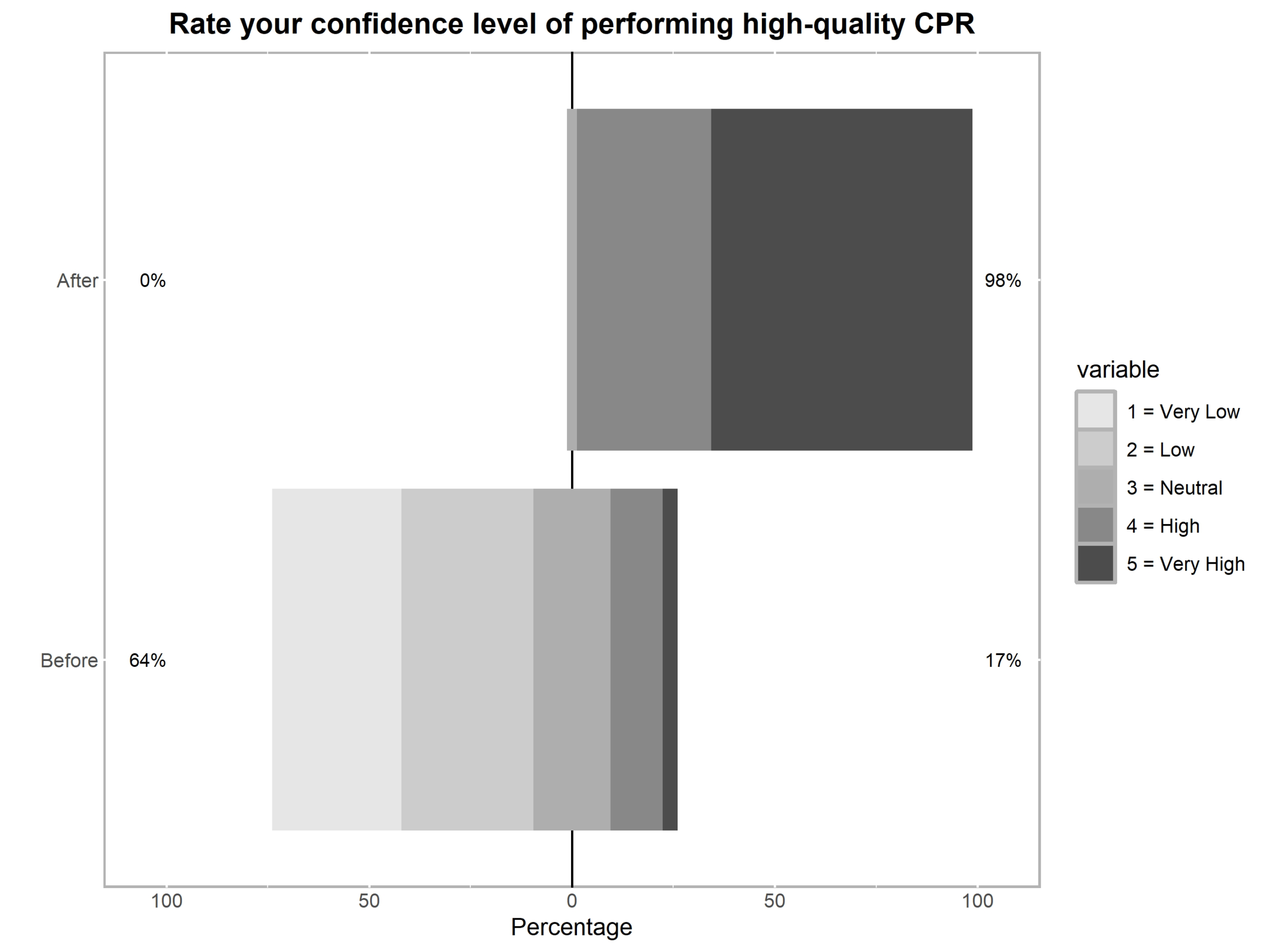
D)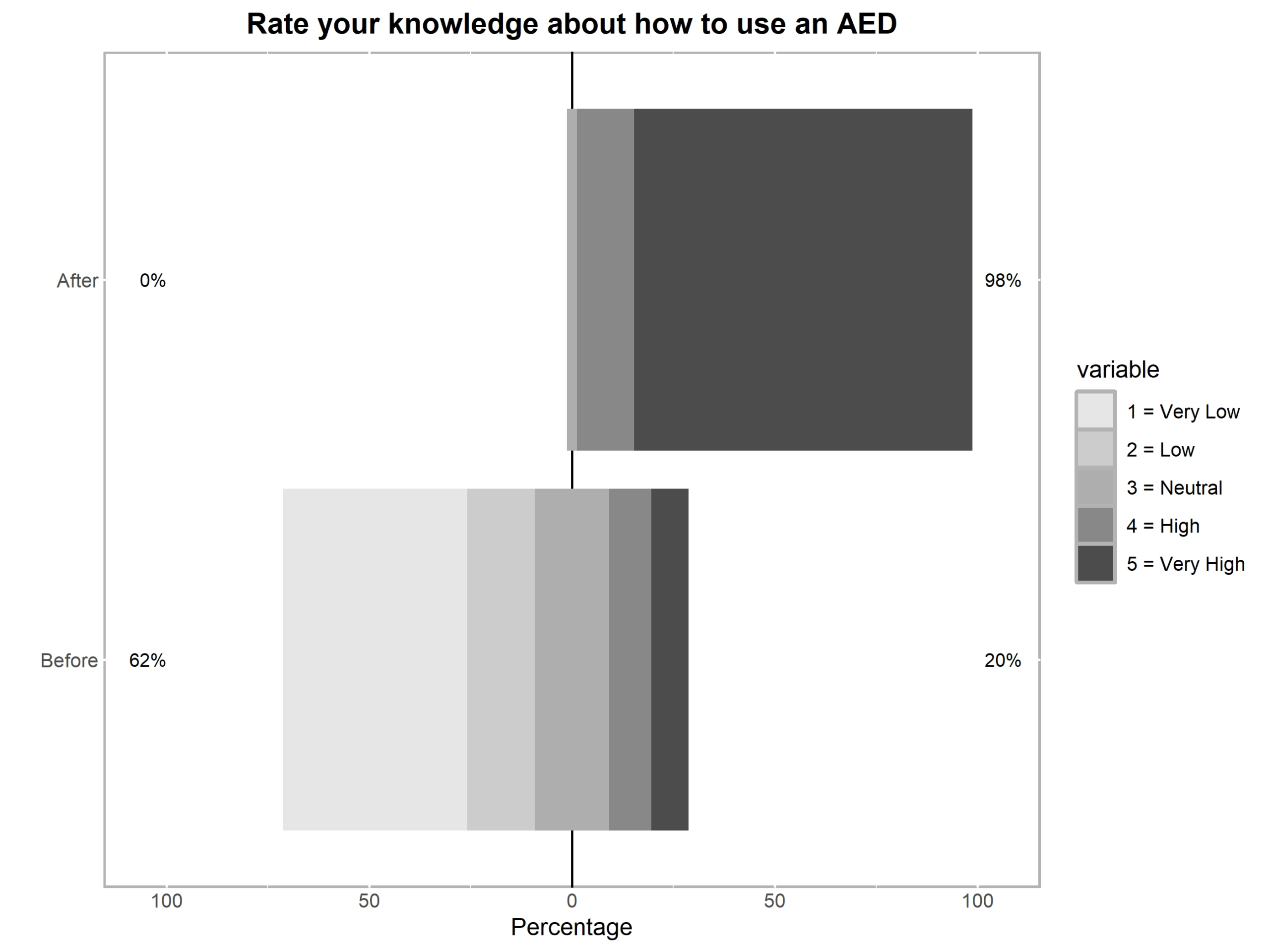
Figure 2. Pre–post changes in self-reported confidence/knowledge (A) Stacked bar chart showing Likert responses of “Before” vs “After” for knowledge of recognizing an opioid overdose (B) Stacked bar chart showing Likert responses of “Before” vs “After” for confidence administering naloxone, (C) Stacked bar chart showing Likert responses of “Before” vs “After” for confidence performing CPR (D) Stacked bar chart showing Likert responses of “Before” vs “After” for knowledge of how to use an AED. Percentages indicate the rounded proportion of respondents rating their knowledge as low (“Very Low” or “Low)” on the left and high (“High” or “Very High”) on the right. Values are rounded in the figure for readability; exact percentages are reported in the text.
Discussion
This pilot study is the first to provide preliminary evidence for the effectiveness of CBEMS-led naloxone and CPR/AED training sessions on improving self-reported participant confidence and knowledge in life-saving interventions. Existing literature suggests significant benefits in self-confidence and knowledge are conferred to participants of naloxone and CPR/AED training courses.5,7,8 As such, training programs that allow for early bystander intervention are encouraged as public health initiatives to address the opioid epidemic and improve OHCA outcomes.9Implementing systems that incorporate peers as instructors, particularly within educational institutions, have been proposed as a promising means to improve accessibility, lower costs, and circumvent challenges associated with bystander training while maintaining efficacy.6,10–12 Taken together, this suggests CBEMS-led training may represent a feasible and beneficial instance of peer-led bystander education within collegiate settings.
Beyond its role in delivering proper training, the program examined in this study provided additional benefits by being held in centrally located campus venues that minimized logistical barriers to attendance, offering structured teaching opportunities that allowed peer instructors to develop instructional and leadership skills, and eliminating financial barriers to participation through a no-cost model. The no-cost model was possible because all instructors volunteered their time, rooms were provided at no cost by the university, and funding for reusable equipment was acquired through a one time grant from the university. The only expenses incurred were the recurring purchases of disposable personal protective equipment and the certification fees paid to the ARC.
Although longitudinal data is necessary for corroboration, these findings suggest that participants’ self-perceived encouragement to pursue additional training may increase their likelihood of enrolling in future medically oriented education. In other words, a highly-accessible collegiate bystander training program may act as a ‘stepping stone’ for future engagement. Amid concern for widespread shortages in the EMS workforce13–17, these programs may serve as a potential pipeline for recruiting young individuals into emergency care roles, including participation in EMS agencies.
Accessibility was another critical factor in this program’s impact, with over half of survey respondents indicating they were unlikely to seek similar training elsewhere, likely due to the time and effort required to attend external courses. This is consistent with previous research citing financial cost and lack of awareness of local courses as major barriers to attending emergency response training.18–20
Limitations
The scope of this study was limited to survey data from training sessions on a single university campus within a relatively short timeframe, introducing a potential for selection bias. The majority of respondents in both the naloxone and CPR/AED training programs were freshmen and sophomores, with students identifying as Asian/Pacific Islander being overrepresented in the sample. This limits the generalizability of the findings to the broader collegiate population and to campuses with different demographic compositions. Participant sex or gender identity and prior emergency response certification were not assessed, which may have presented additional context for data interpretation.
Survey responses were collected through a single end-of-training survey, which may have introduced response bias, particularly recall bias, as participants could have misassessed their pre-training confidence and knowledge.
Without longitudinal data, it is difficult to determine the long-term effectiveness of the training in real-world scenarios. Additionally, while self-reported measures of self-efficacy, such as confidence and knowledge, were high immediately after training, these subjective assessments may not accurately reflect actual performance, and the retention of these skills over time remains uncertain.
Conclusion
This pilot study offers preliminary evidence that CBEMS-led naloxone and CPR/AED training sessions are associated with significant increases in participant self-rated confidence and knowledge to administer intranasal naloxone and deliver high-quality CPR. Furthermore, given the cost-effectiveness and accessibility of the described training program, similar bystander training programs may be effective models for other college campuses to adopt, particularly those with CBEMS agencies capable of managing and administering the training sessions. Additional research using objective assessments of skill performance and longitudinal follow-up at other institutions is needed to validate these findings and further evaluate the impact of CBEMS-led naloxone and CPR/AED training.
Acknowledgements
The authors would like to acknowledge and thank the instructors and members of the University of Washington Emergency Medical Services who contributed to the success of the training courses. Finally, they would also like to thank the University of Washington Paramedic Training Program, University of Washington Division of Campus Community Safety, Husky Health Center, and the Associated Students of the University of Washington for their support.
References
- Tsao CW, Aday AW, Almarzooq ZI, et al. Heart Disease and Stroke Statistics—2023 Update: A Report From the American Heart Association. Circulation. 2023;147(8). doi:10.1161/CIR.0000000000001123
- Garnett M, Miniño A, Joyce M, Driscoll A, Valenzuela C. Drug Overdose Deaths in the United States, 2003–2023. National Center for Health Statistics (U.S.); 2024. doi:10.15620/cdc/170565
- Abuse NI on D. Naloxone DrugFacts | National Institute on Drug Abuse (NIDA). January 11, 2022. Accessed December 26, 2025. https://nida.nih.gov/publications/drugfacts/naloxone
- Lewis DA, Park JN, Vail L, Sine M, Welsh C, Sherman SG. Evaluation of the Overdose Education and Naloxone Distribution Program of the Baltimore Student Harm Reduction Coalition. Am J Public Health. 2016;106(7):1243-1246. doi:10.2105/AJPH.2016.303141
- Panther SG, Bray BS, White JR. The implementation of a naloxone rescue program in university students. J Am Pharm Assoc. 2017;57(2):S107-S112.e2. doi:10.1016/j.japh.2016.11.002
- Brown M, Tran C, Dadiomov D. Lowering barriers to naloxone access through a student-led harm reduction program. J Am Pharm Assoc. 2023;63(1):349-355. doi:10.1016/j.japh.2022.10.030
- Jaskiewicz F, Kowalewski D, Kaniecka E, Kozlowski R, Marczak M, Timler D. Factors Influencing Self-Confidence and Willingness to Perform Cardiopulmonary Resuscitation among Working Adults—A Quasi-Experimental Study in a Training Environment. Int J Environ Res Public Health. 2022;19(14):8334. doi:10.3390/ijerph19148334
- Beauchamp GA, Cuadrado HM, Campbell S, et al. A Study on the Efficacy of a Naloxone Training Program. Cureus. Published online November 23, 2021. doi:10.7759/cureus.19831
- Dainty KN, Colquitt B, Bhanji F, et al. Understanding the Importance of the Lay Responder Experience in Out-of-Hospital Cardiac Arrest: A Scientific Statement From the American Heart Association. Circulation. 2022;145(17). doi:10.1161/CIR.0000000000001054
- Kim J, Yang EBM, Adio EBA, et al. Improvements in the Self-Efficacy of CPR Performance Following a Brief Hands-only Training Program for College Students | The Journal of Collegiate Emergency Medical Services. September 15, 2023. Accessed December 26, 2025. https://www.collegeems.com/improvements-in-the-self-efficacy-of-cpr-performance-following-a-brief-hands-only-training-program-for-college-students/
- Damvall DA, Birkenes TS, Nilsen K, Haaland SH, Myklebust H, Nordseth T. Can high school students teach their peers high quality cardiopulmonary resuscitation (CPR)? Resusc Plus. 2022;10:100250. doi:10.1016/j.resplu.2022.100250
- Choi HS, Lee DH, Kim CW, Kim SE, Oh JH. Peer-assisted learning to train high-school students to perform basic life-support. World J Emerg Med. 2015;6(3):186. doi:10.5847/wjem.j.1920-8642.2015.03.004
- Moore S. 4th Annual Study Shows Worsening EMS Turnover. American Ambulance Association. October 17, 2022. Accessed December 27, 2025. https://ambulance.org/2022/10/17/4th-annual-study-shows-worsening-ems-turnover/
- Ambulance services face national paramedic shortage. EMS1. March 28, 2019. Accessed December 27, 2025. https://www.ems1.com/paramedic-jobs-and-careers/articles/ambulance-services-face-national-paramedic-shortage-QAINB7yNEngfu5ID/
- EMS agencies facing shortage of EMTs, paramedics. Accessed December 27, 2025. https://www.thetimesherald.com/story/news/2021/05/20/ems-agencies-facing-shortage-emts-paramedics/5131825001/
- Kaplan J. An EMT labor shortage might mean you have to wait longer after calling 911, report says. Business Insider. Accessed December 27, 2025. https://www.businessinsider.com/emt-labor-shortage-could-mean-longer-911-wait-time-2021-10
- EMS services warn of “crippling labor shortage” undermining 911 system. NBC News. October 8, 2021. Accessed December 27, 2025. https://www.nbcnews.com/news/us-news/ems-services-warn-crippling-labor-shortage-undermining-911-system-rcna2677
- Sasson C, Haukoos JS, Bond C, et al. Barriers and Facilitators to Learning and Performing Cardiopulmonary Resuscitation in Neighborhoods With Low Bystander Cardiopulmonary Resuscitation Prevalence and High Rates of Cardiac Arrest in Columbus, OH. Circ Cardiovasc Qual Outcomes. 2013;6(5):550-558. doi:10.1161/CIRCOUTCOMES.111.000097
- Broach, Md, Mph, Mba, Facep J, Smith, Ma, Md, Facep ME. Emergency preparedness training preferences and perceived barriers to training among various healthcare providers and public health practitioners in Massachusetts. Am J Disaster Med. 2017;12(2):85-106. doi:10.5055/ajdm.2017.0264
- Sheak K, Hatchman L, Dunstan J, et al. Abstract 19639: Reducing Educational Barriers to Address Cpr Training Disparities in a Large Us Urban Community. Circulation. 2015;132(suppl_3). doi:10.1161/circ.132.suppl_3.19639